
How Titanium is Processed and Fabricated into Products
TITANIUM
SHINSHENG TECH Admin
1/9/20262 min read
How Titanium is Processed and Fabricated into Products
Titanium is difficult to process because of its high strength, low thermal conductivity, and strong chemical reactivity at high temperatures, but it can be formed into various industrial and consumer products through specialized processes. Below is a detailed breakdown of its typical processing and manufacturing flow.
1. From Ore to Titanium Material
1.1 Raw Material Extraction & Reduction
Titanium ore (ilmenite or rutile) is first processed into titanium tetrachloride (TiCl₄).
The Kroll process is widely used: TiCl₄ is reduced with magnesium or sodium to produce sponge titanium.
Sponge titanium is the basic raw material for all titanium products.
1.2 Melting & Ingot Casting
Sponge titanium is pressed into electrodes, then melted in a vacuum arc remelting (VAR) furnace.
Multiple remelting improves purity and homogeneity.
The result is a titanium ingot, which is then formed into billets, slabs, or rods.
2. Primary Forming Processes
2.1 Forging
Used for high-performance parts (aerospace, military, medical).
Hot forging at 800–1100°C breaks coarse grains and improves mechanical properties.
Produces preforms for disks, shafts, blades, and structural components.
2.2 Rolling
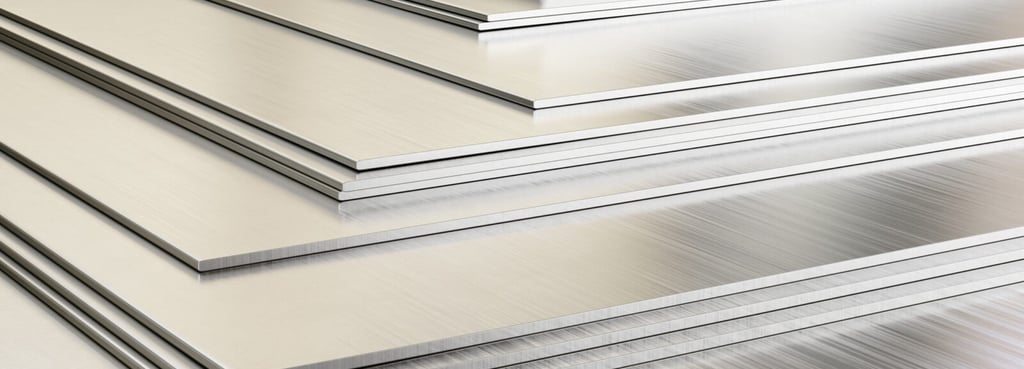
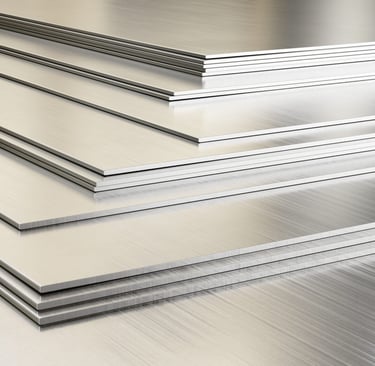
Hot rolling: Turns ingots into plates, sheets, strips, and profiles.
Cold rolling: Produces thin, high-precision titanium sheets for heat exchangers, casings, etc.
2.3 Extrusion
Titanium billet is heated and pushed through a die.
Makes seamless tubes, rods, and special profiles for aerospace and piping.
2.4 Drawing
Used to produce titanium wire and thin tubes with high dimensional accuracy.
Applied in medical implants, fasteners, and springs.
3. Secondary Machining & Forming
3.1 Cutting & Machining
Titanium is hard to machine because:
It work-hardens easily.
Low thermal conductivity causes tool overheating.
Common methods:
CNC turning, milling, drilling with rigid machines and carbide / high-performance tools.
Used for precision parts: valve bodies, medical implants, engine components.
3.2 Sheet Metal Forming
Stamping, bending, deep drawing: for shells, casings, covers.
Often done at warm temperatures to reduce springback and cracking.
3.3 Welding
Titanium reacts with O₂, N₂, H₂ at high temperatures, so welding must be done in a protected atmosphere (argon shielded).
Main methods: TIG, MIG, plasma welding, electron beam welding.
Used in heat exchangers, pressure vessels, aircraft structures.
4. Heat Treatment
Titanium’s properties are strongly controlled by heat treatment:
Annealing: improves ductility and relieves stress.
Solution treatment + aging: increases strength for high-performance alloys.
Used in aerospace and high-stress structural parts.
5. Surface Treatment
Pickling & passivation: removes oxide scale and forms a stable protective film.
Anodizing: produces color and improves corrosion resistance.
Polishing: for medical implants, watches, jewelry.
Coating: enhances wear and high-temperature resistance.
6. Typical End Products & Their Processes
Product Type Main Processes
Aerospace components Melting → forging → heat treatment → CNC machining
Medical implants Forging → CNC machining → polishing → passivation
Heat exchangers Sheet rolling → punching → bending → argon welding
Titanium tubes Extrusion → drawing → straightening → testing
Consumer goods (watches, frames) Casting / stamping → polishing → surface treatment
Summary
Titanium processing requires strict control of temperature, atmosphere, and tooling to avoid contamination and defects. Its full production chain includes:
ore → sponge titanium → ingot → forging/rolling/extrusion → machining/welding → heat treatment → surface treatment → final product
SHINSHENG TECH
SHINSHENG TECH service portfolio: automotive precision stamping tooling, plastic injection mold, die-casting mold &related parts; linear motor &frameless torque motor; filtering material &air/water/oil filter; ODM/OEM and customized services.
© 2025-2026 SHINSHENG TECH. All rights reserved.
Quick links
Get in touch
Address
Community 40, Fuxing Road, Haidian District, Beijing, China