
Titanium: An In‑Depth Introduction, Advantages and Applications
TITANIUM
SHINSHENG TECH Admin
12/25/20252 min read
Titanium: An In‑Depth Introduction, Advantages and Applications
1. What is Titanium
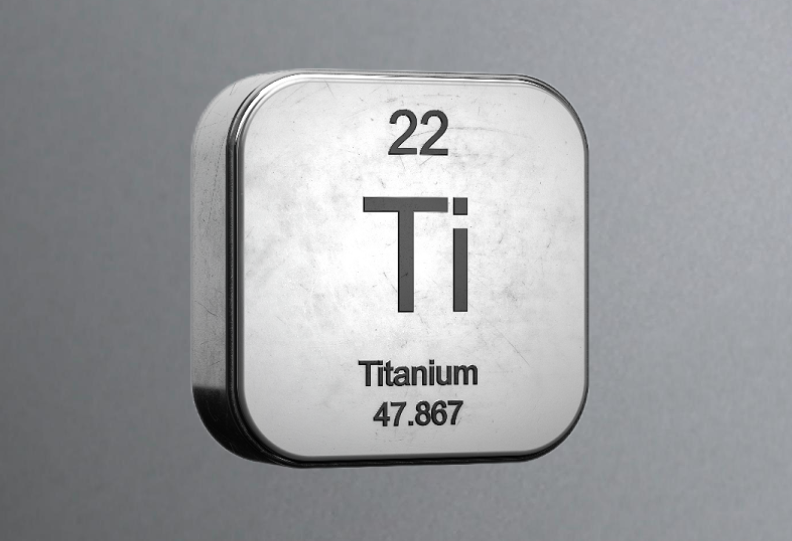
Titanium (chemical symbol Ti, atomic number 22) is a silvery-white, lightweight, high-strength transition metal. It is widely found in minerals such as ilmenite and rutile, making it the ninth most abundant element in the Earth’s crust and the fourth most abundant structural metal.
Although titanium is plentiful, extracting and refining it is complex and energy-intensive, which makes it a high-value strategic material for modern industry, aerospace, medicine, and high-end manufacturing.
2. Key Properties & Advantages of Titanium
2.1 Outstanding Strength-to-Weight Ratio
Density is only about 60% that of steel, but its strength is comparable to many alloy steels.
Extremely high specific strength — stronger and lighter than aluminum alloys and most structural metals.
Ideal for applications where weight reduction and high performance are required.
2.2 Excellent Corrosion Resistance
Naturally forms a stable, dense oxide film (TiO₂) in air and water.
Highly resistant to seawater, acid, alkali, salt spray, and many corrosive chemicals.
Corrosion resistance is far better than stainless steel in marine and harsh environments.
2.3 Wide Temperature Resistance
Maintains good mechanical properties at high temperatures without rapid softening.
Retains toughness and stability at ultra-low temperatures, making it suitable for extreme environments.
2.4 Excellent Biocompatibility
Non-toxic, non-allergic, and does not harm human tissues or blood.
Can integrate with bone and connective tissue.
The most widely accepted metal for human implants in the medical field.
2.5 Other Important Advantages
Good fatigue resistance, even under long-term cyclic loading.
Low elastic modulus close to human bone, reducing stress shielding.
Good formability, weldability, and durability under harsh conditions.
3. Main Applications of Titanium
3.1 Aerospace Industry
Titanium is irreplaceable in aircraft, rockets, and satellites:
Airframe structural parts, wings, landing gear
Engine components: compressor blades, casings, disks
Satellites, missiles, and spacecraft structures
Benefits: lightweight, high strength, heat resistance
3.2 Medical and Healthcare
The top choice for implantable devices:
Artificial joints (hip, knee, shoulder)
Bone plates, intramedullary nails, screws
Dental implants and orthodontic materials
Surgical instruments and cardiac devices
Benefits: biocompatible, non-toxic, corrosion-resistant
3.3 Marine and Offshore Engineering
Perfect for seawater environments:
Ships, submarines, underwater vehicles
Seawater desalination equipment
Offshore drilling platforms, pipelines, valves
Marine heat exchangers and pumps
Benefits: superior seawater corrosion resistance
3.4 Chemical and Petrochemical Industry
Used in highly corrosive environments:
Reactors, heat exchangers, pressure vessels
Valves, pumps, pipes for acids and chemicals
Electrodes and electrolysis equipment
Benefits: resists corrosion, long service life
3.5 Automotive and Transportation
Growing use in high-performance and new-energy vehicles:
High-performance engine and chassis parts
Exhaust systems, suspension components
Lightweight parts for racing cars and EVs
Benefits: weight reduction, improved fuel efficiency, longer life
3.6 Sports, Leisure and Consumer Goods
High-end bicycle frames, golf clubs, tennis rackets
Watch cases, eyeglass frames, jewelry
Laptop shells, mobile phone parts
Benefits: light, strong, durable, stylish
4. Summary
Titanium is known as the “metal of the future” because it uniquely combines:
Light weight
High strength
Excellent corrosion resistance
Wide temperature stability
Outstanding biocompatibility
It supports the development of high-tech industries such as aerospace, medical treatment, marine engineering, new energy, and advanced manufacturing. With continuous improvements in production and processing technology, titanium is becoming more widely used worldwide.
SHINSHENG TECH
SHINSHENG TECH service portfolio: automotive precision stamping tooling, plastic injection mold, die-casting mold &related parts; linear motor &frameless torque motor; filtering material &air/water/oil filter; ODM/OEM and customized services.
© 2025-2026 SHINSHENG TECH. All rights reserved.
Quick links
Get in touch
Address
Community 40, Fuxing Road, Haidian District, Beijing, China