
Titanium Anodes: Advantages and Applications
TITANIUM ELECTRODE
SHINSHENG TECH Admin
12/5/20252 min read
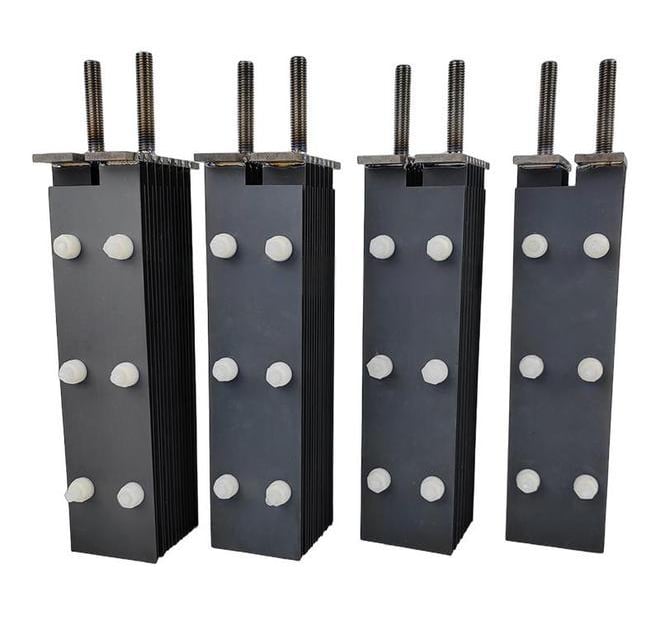
Titanium Anodes: Advantages & Applications
Titanium anodes, also widely known as Dimensionally Stable Anodes (DSAs), are high-performance electrochemical electrodes composed of a corrosion-resistant titanium substrate coated with precious metal catalytic layers (e.g., ruthenium-iridium, platinum, tantalum). They have replaced traditional graphite, lead, and iron anodes as the preferred choice for modern electrochemical processes, with outstanding performance and wide industrial adaptability.
Core Advantages
Exceptional Dimensional Stability
Unlike consumable traditional anodes, titanium anodes retain their original geometric shape and size during long-term electrolysis, ensuring stable electrolytic efficiency and process consistency.
Superior Corrosion Resistance
The titanium substrate delivers excellent corrosion resistance in harsh media—including strong acids, alkalis, high-salt brines, and seawater. The precious metal catalytic coating further prevents electrochemical dissolution, adapting to extreme working environments.
High Electrochemical Catalytic Activity & Low Energy Consumption
Customizable catalytic coatings deliver high activity for target electrochemical reactions, significantly reducing overpotential. This lowers power consumption in electrolysis, cutting operational costs for industrial users.
Long Service Life
The wear-resistant catalytic layer extends service life by dozens of times compared to conventional anodes, reducing anode replacement frequency, downtime, and maintenance costs.
Eco-Friendly Performance
Titanium anodes produce no heavy metal leachate (e.g., lead pollution from lead anodes), eliminate secondary environmental contamination, and comply with global industrial environmental protection regulations.
Flexible Processing & Versatile Form Factors
Titanium substrates are easy to machine into plates, meshes, tubes, rods, and custom-shaped parts, matching diverse equipment and process installation requirements.
High Current Efficiency
They enable uniform current distribution during electrolysis, boosting the yield and purity of electrolytic products while minimizing side reactions.
Major Application Scenarios
Chlor-Alkali Industry
The most mainstream application: electrolysis of saturated brine to produce chlorine gas, caustic soda, and hydrogen, the core process for the chlor-alkali chemical industry.
Hydrometallurgy
Applied to electrowinning and electrorefining of non-ferrous metals including copper, zinc, nickel, gold, and silver, improving metal recovery rate and product purity.
Water & Wastewater Treatment
Used for electrochemical disinfection, industrial wastewater COD degradation, algae removal, and organic pollutant oxidation; also for pre-treatment in seawater desalination.
Electroplating & Surface Finishing
Serve as inert anodes for decorative and functional electroplating (nickel, chromium, zinc plating), ensuring uniform coating deposition and stable plating solution properties.
Marine Engineering & Antifouling
Electrolyze seawater to generate sodium hypochlorite for antifouling of ships, docks, and cooling water systems, preventing marine biofouling.
Cathodic Protection
Deployed as impressed current anodes for corrosion protection of oil/gas pipelines, storage tanks, port steel structures, and offshore facilities.
Organic Electrosynthesis
Catalyze electrochemical synthesis of fine chemicals, pharmaceutical intermediates, and specialty organic compounds.
Hydrogen Production & Energy Storage
Used in electrolytic water hydrogen production systems and emerging electrochemical energy storage devices as high-performance electrode components.
Summary
Titanium anodes stand out as a high-efficiency, energy-saving, and eco-friendly upgrade solution for electrochemical industries. Their customizable design and reliable performance make them indispensable for industrial processes pursuing high stability, low operating costs, and sustainable production.
SHINSHENG TECH
SHINSHENG TECH service portfolio: automotive precision stamping tooling, plastic injection mold, die-casting mold &related parts; linear motor &frameless torque motor; filtering material &air/water/oil filter; ODM/OEM and customized services.
© 2025-2026 SHINSHENG TECH. All rights reserved.
Quick links
Get in touch
Address
Community 40, Fuxing Road, Haidian District, Beijing, China